
The Discoverie of Witchcraft
The Discoverie of Witchcraft


Choose options
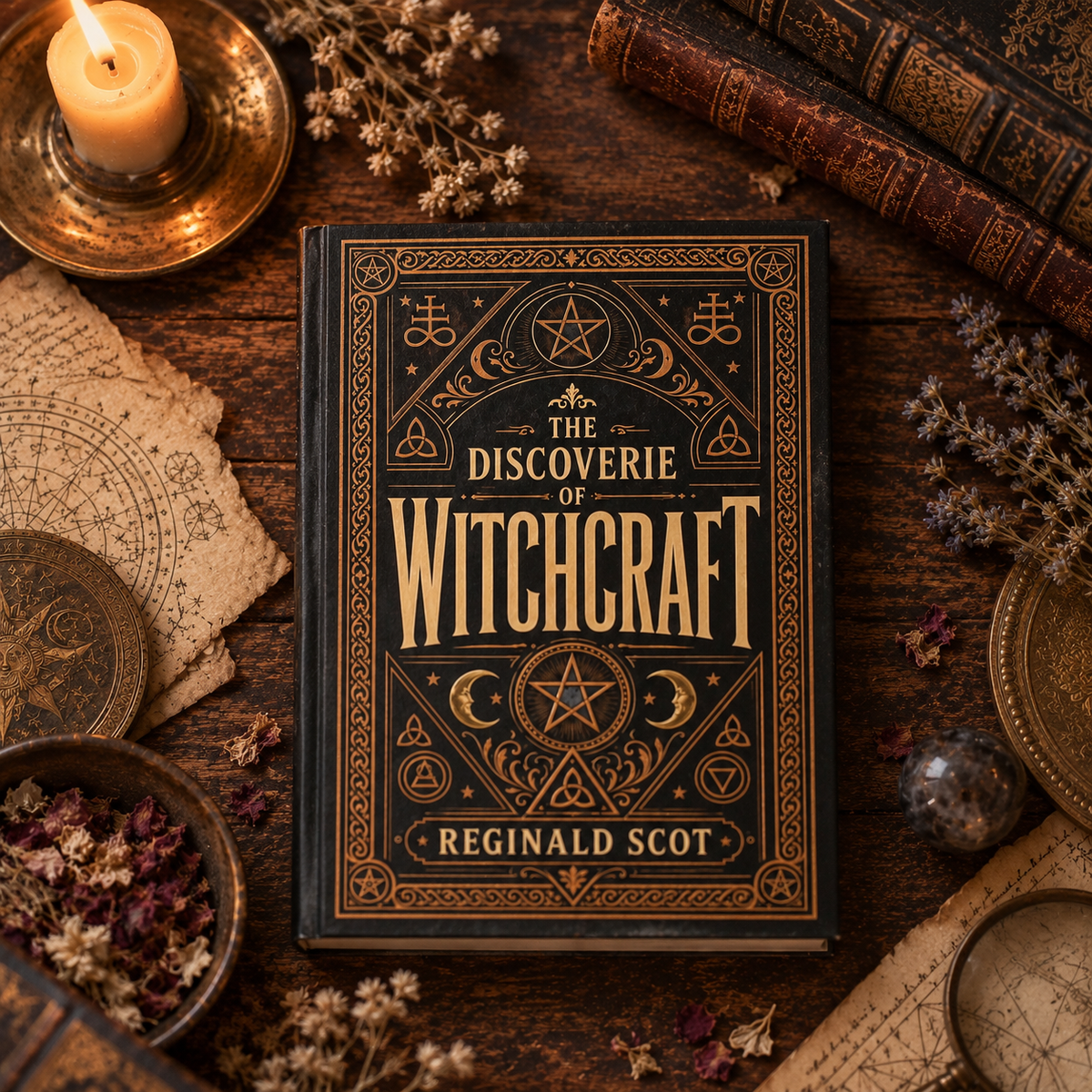
About this book
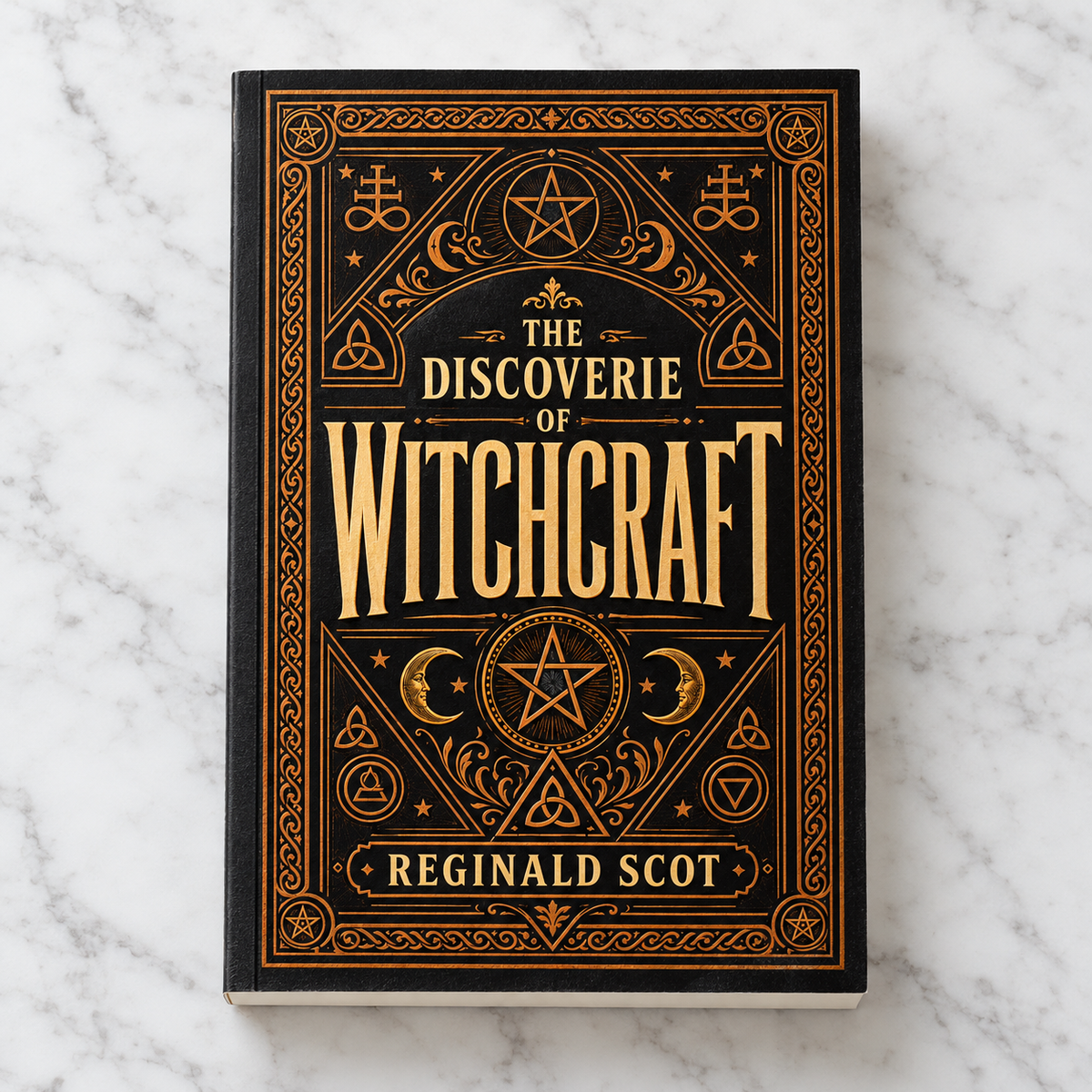
First published in 1584, The Discoverie of Witchcraft by Reginald Scot is one of the earliest substantial English works to challenge prevailing beliefs about witchcraft. Appearing at a time when accusations of sorcery could carry severe consequences, Scot questioned whether the powers commonly attributed to witches had any basis in reality and criticised the methods used to obtain confessions from the accused.
Scot was particularly concerned with the treatment of poor, elderly and vulnerable people who found themselves suspected of witchcraft. Throughout the work, he examines familiar claims concerning witches and spirits, arguing against supposed supernatural abilities such as flying through the air, causing illness and entering into contracts with devils. He was not writing from a modern secular position—his arguments belong firmly to the religious world of sixteenth-century England—but his scepticism towards many popular witchcraft beliefs was striking for its time.
The book ranges far beyond witch trials. Scot discusses charms, divination, astrology, conjuring, spirits and other forms of supposed supernatural activity. Of particular interest are his explanations of tricks performed by jugglers and conjurers. By describing how apparently impossible feats could be achieved through sleight of hand and deception, Scot provided some of the earliest detailed English accounts of practical conjuring techniques.
The Discoverie also occupies an interesting place in the wider debate over witchcraft in early modern Britain. Its sceptical arguments were sufficiently well known that James VI and I later attacked the views associated with Scot and Johann Weyer in his own Daemonologie.
More than four centuries later, The Discoverie of Witchcraft remains an important source for the study of witchcraft, demonology, magic and scepticism in Renaissance England. It records not simply what people believed about witches, but the arguments of a writer prepared to question those beliefs at a time when doing so was far from commonplace.
Inside the book
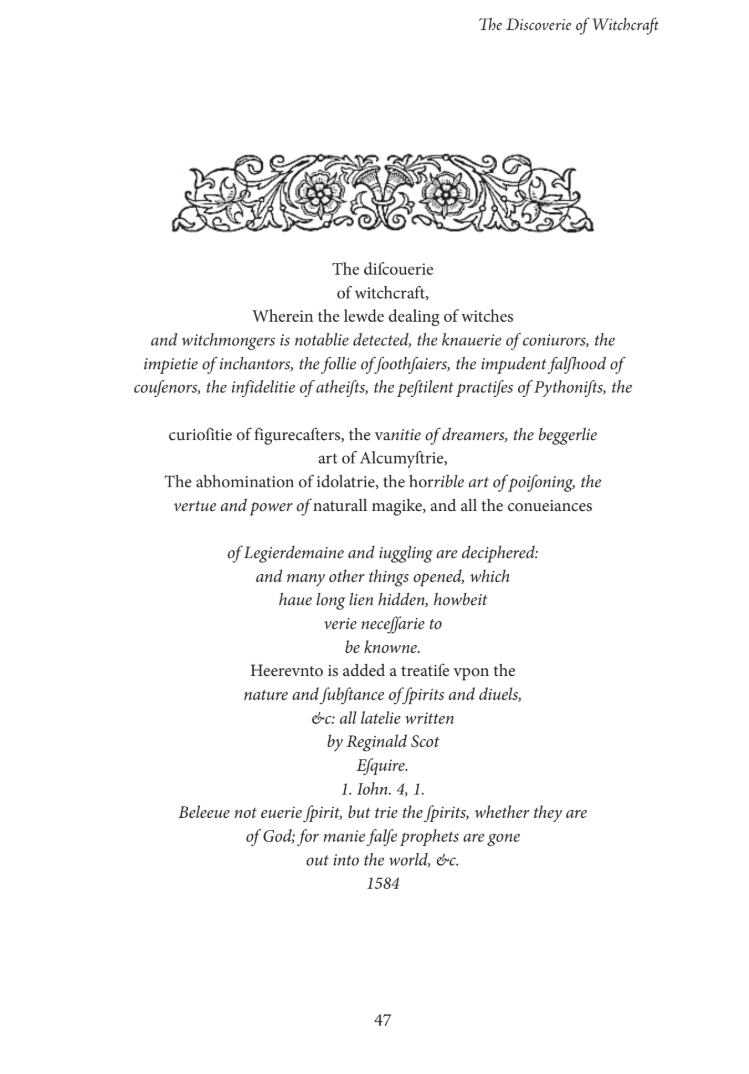
The Discoverie of Witchcraft
Product Details
We ship worldwide, with print locations in the UK, USA and Canada. Our Box Sets are produced exclusively in the UK. All orders are sent fully tracked and insured. From the date your order is placed, please allow the following estimated delivery times:
UK: 10–21 working days
USA: 10–21 working days
Europe: 10–21 working days
Rest of World: 10–21 working days
Our books are printed to order, so we are unable to accept returns for change of mind except where required by applicable law. If your order arrives damaged, faulty or incorrect, please contact us and we will arrange a replacement or appropriate resolution. This does not affect your statutory rights. Please see our full Returns & Refunds Policy for further information.



First to Discover What’s Next
New collections, newly restored books, exclusive digital releases and occasional subscriber-only offers, sent directly to your inbox.